The last two weeks have been packed for MarineGuardian with 2 events attended. One consistent message was delivered through both of them: pathways to impact are the actual focus and challenge.
Setting the scene: Riding the Wave, Ammochostos, Cyprus
The journey started on 11–12 May 2026 in Aya Napa, Cyprus, at Riding the Wave: Advancing the EU Ocean Pact through Science, Innovation and Cooperation, the flagship conference of the Cyprus EU Presidency bringing together ocean science, policy and innovation communities.
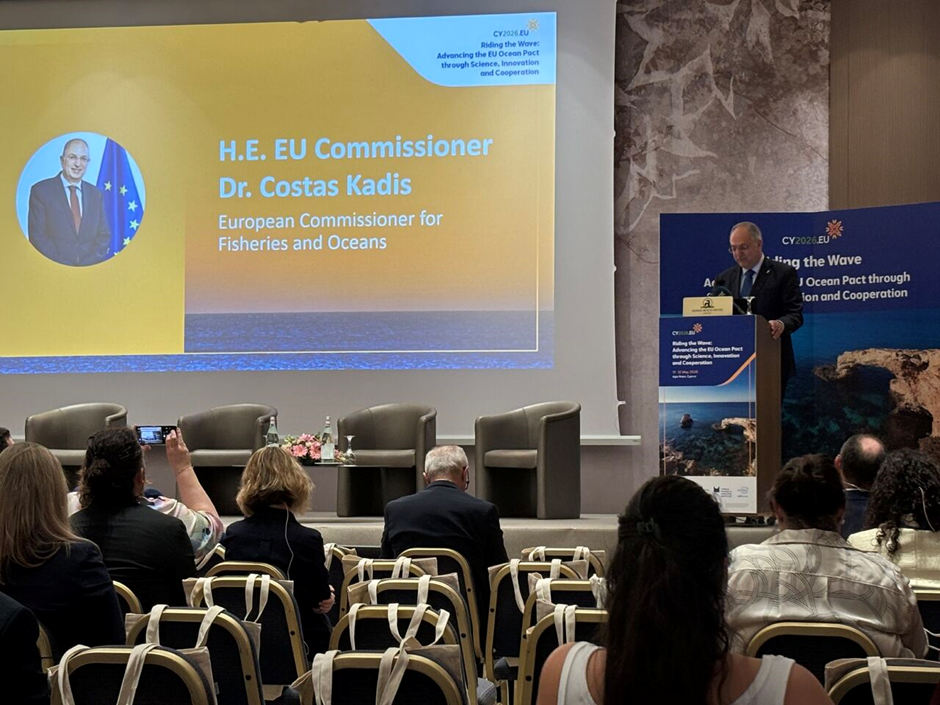
MarineGuardian’s impact officer and WP5 leader, Caecilia Manago from ICES attended the conference, where one remark stood out as particularly resonant. Zacharias Siokouros, CEO of the Cyprus Marine and Maritime Institute (CMMI), stated that “pathways to impact are the actual focus and challenge.”
For a project like ours, built around turning fisheries research into real-world adoption, facing the days to days challenges connected to this step, it was the right room to be in and the right conversation to be having.
Sharing the stage the European Maritime Days 2026
At the European Commission Stand: The FishScanner accessible up close
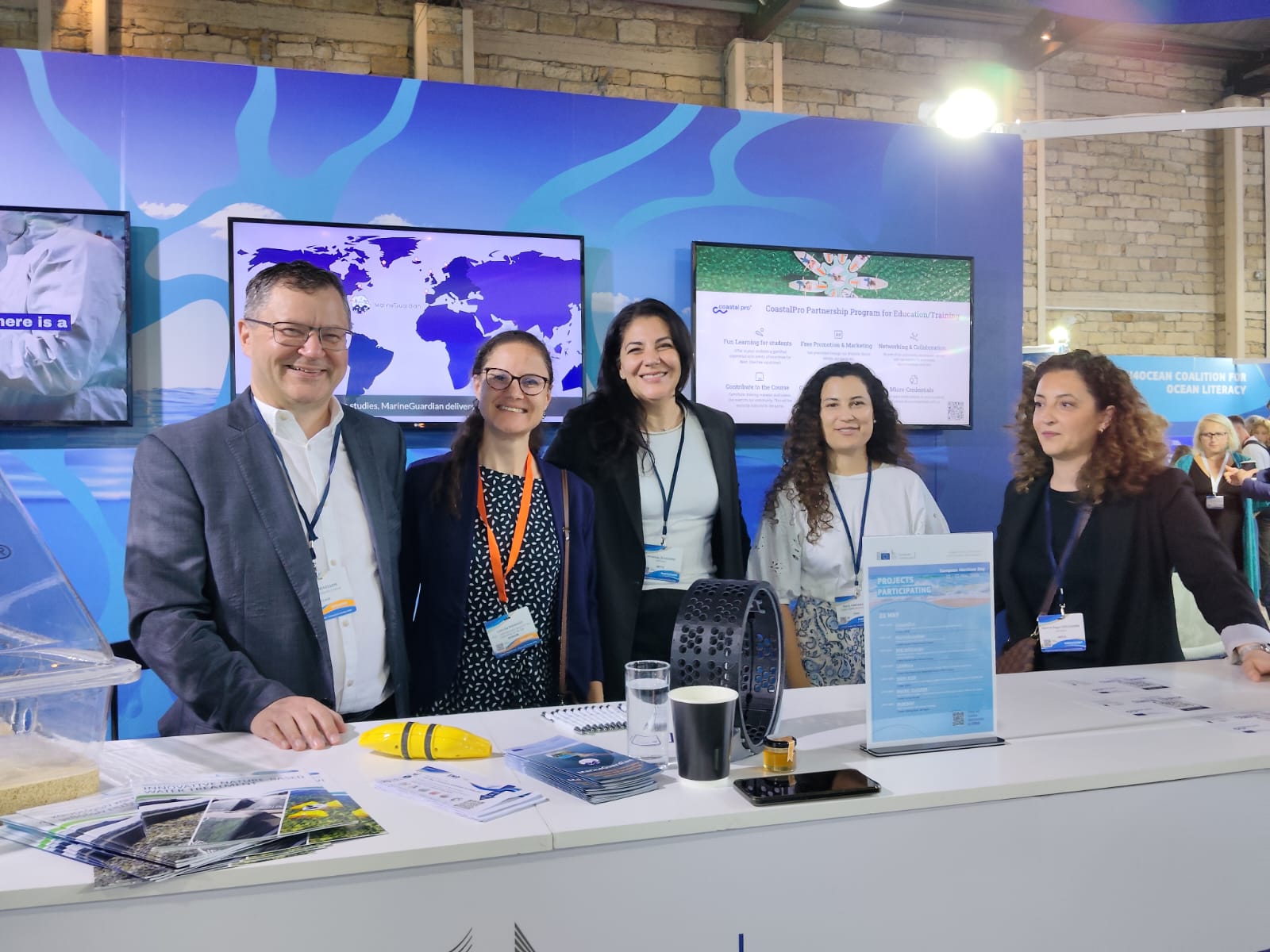
The following week, the MarineGuardian team went to the #EMD2026 in Limassol, where our coordinator Jónas Viðarsson, from Matís presented at the European Commission stand on the morning of May 21st.
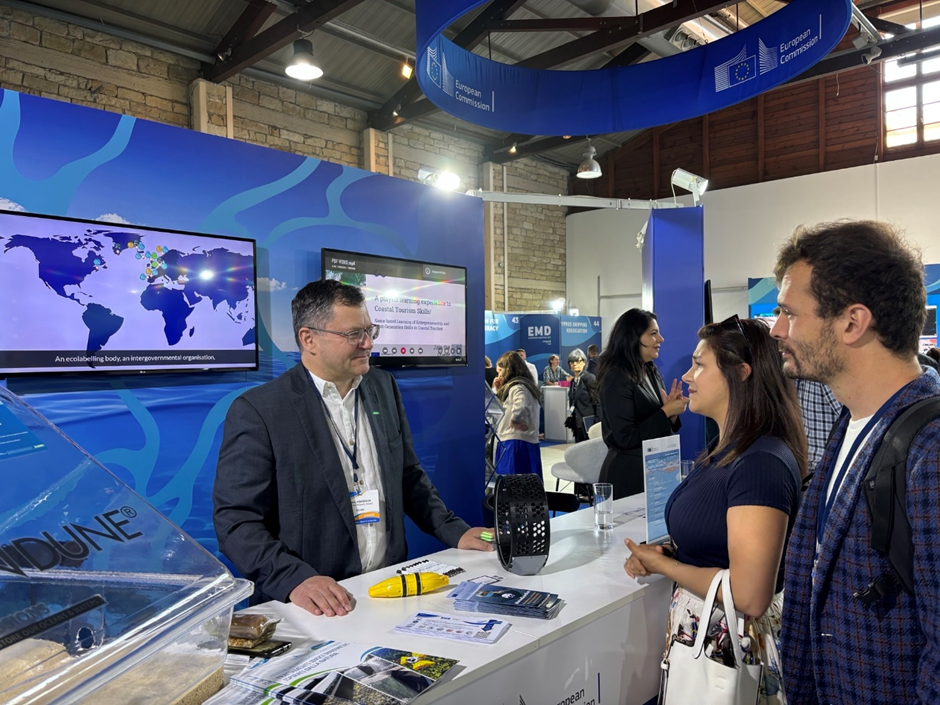
At the centre of the presentation: a small commercial version of the FishScanner, a camera system designed to operate inside the trawl net, identifying and sizing catch in real time before it reaches the codend. The technology is being advanced in collaboration with Marine and Freshwater Research Institute of Iceland and Star-Oddi, and represents one of the core solutions MarineGuardian is developing toward commercial adoption.
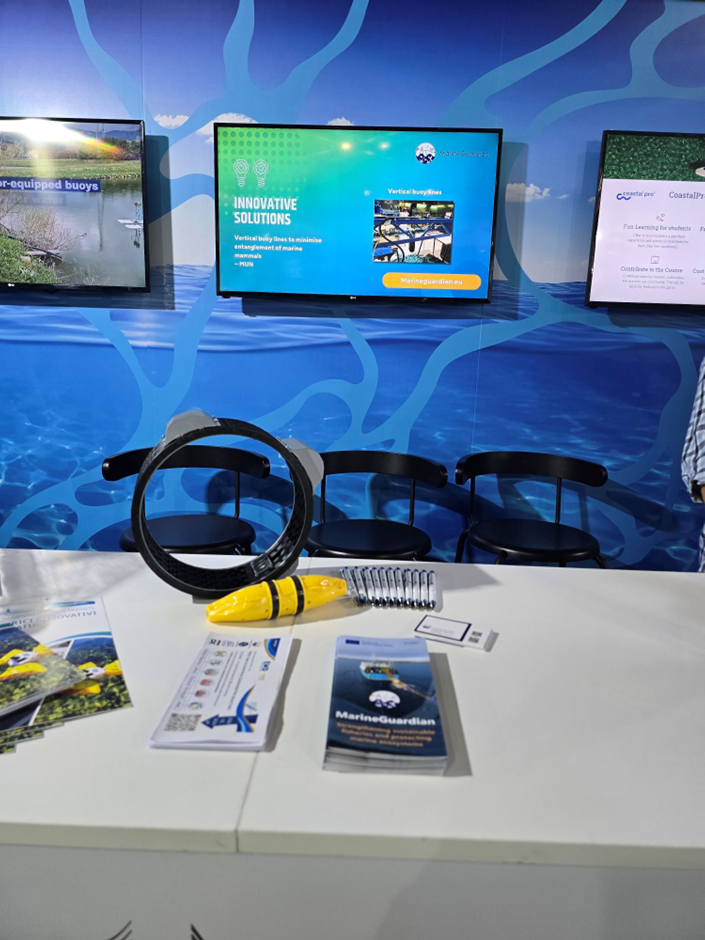
MarineGuardian shared the stand with two other EU projects, CoastalPro and RHE-MEDIATION creating an informal but productive space for cross-project exchange and connection with a wide range of visitors.
The FishScanner attracted genuine interest from attendees, reflecting a growing appetite among fisheries stakeholders for practical, on-vessel technological solutions.
The Workshop – Gear to Governance: Sustainable fish value chains
On the afternoon of May 22nd, the Gear to Governance: Sustainable Fish Value Chain workshop brought together approximately 50 participants for one of the most hands-on sessions of the programme.
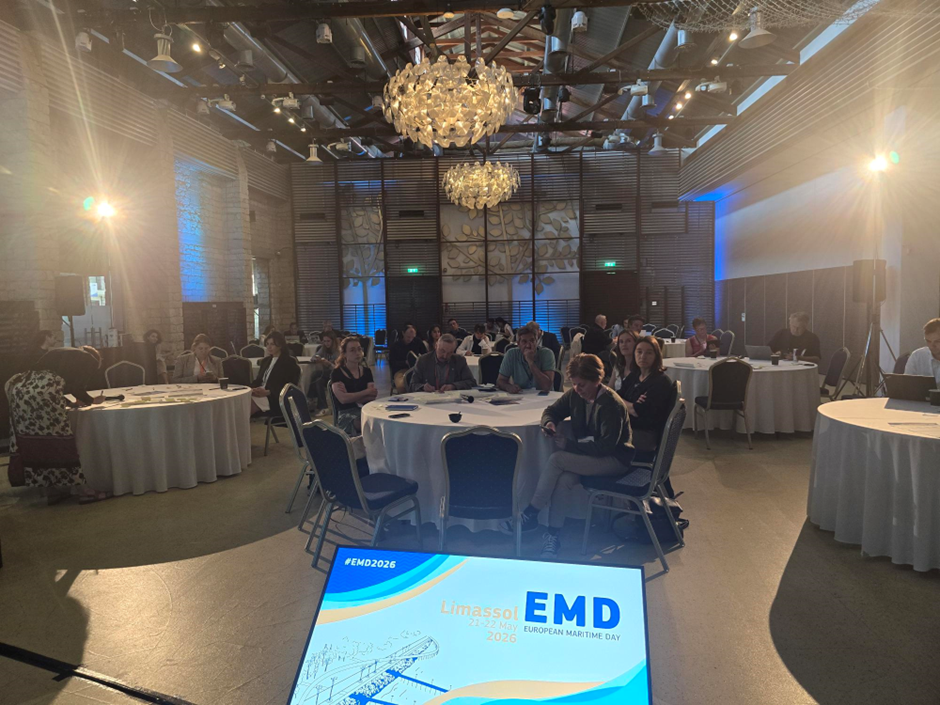
Led by Caecilia Manago, the workshop opened with short presentations from four EU research projects, MarineGuardian, ECO-CATCH, DecarbonyT and Mr.GoodFish3.0, each presenting a targeted solution to a specific challenge in sustainable fisheries. Participants then moved into a PESTEL carousel, rotating through stations and collectively mapping the political, economic, social, technological, environmental and legal factors that could determine whether each solution achieves real-world adoption.
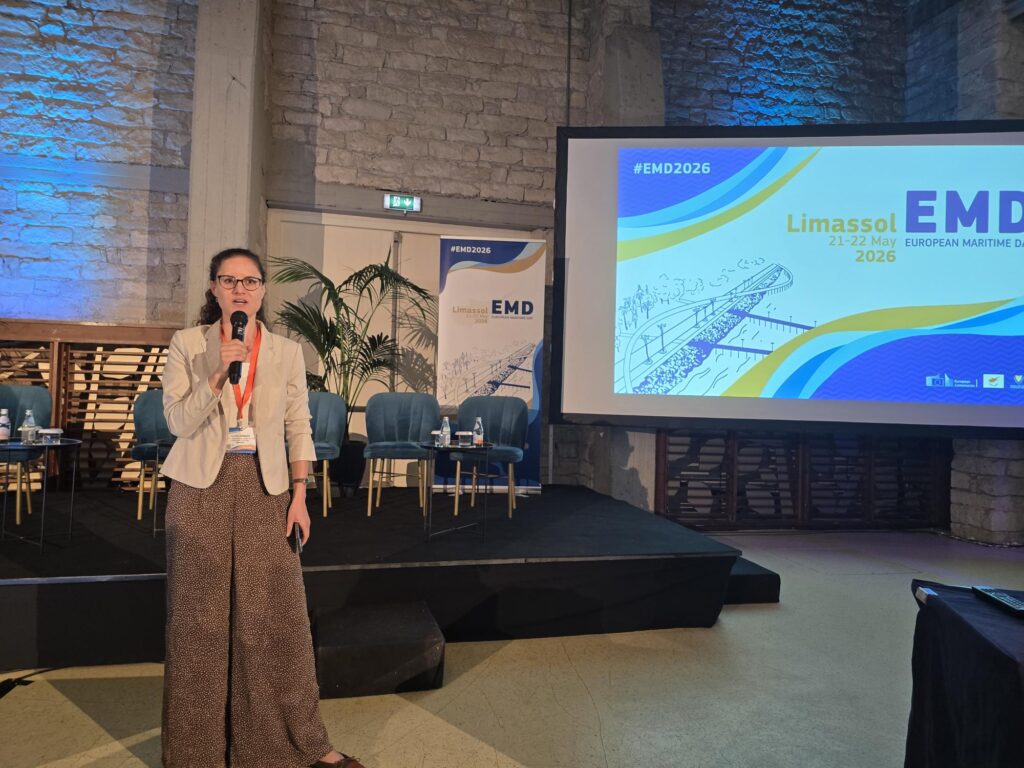
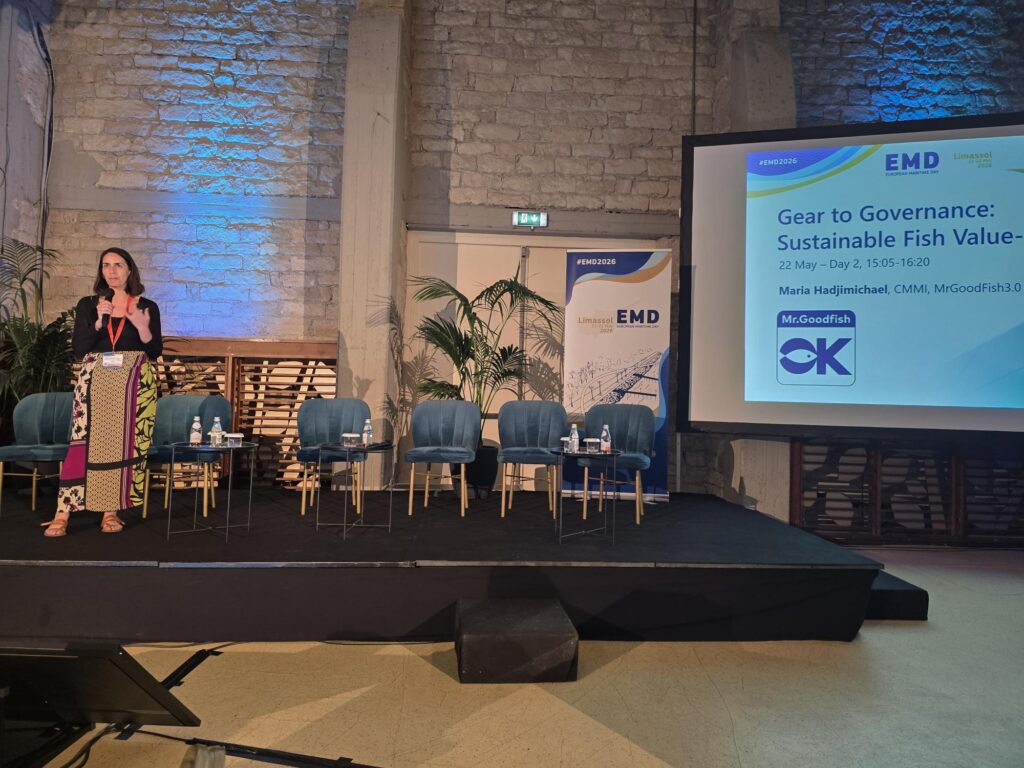
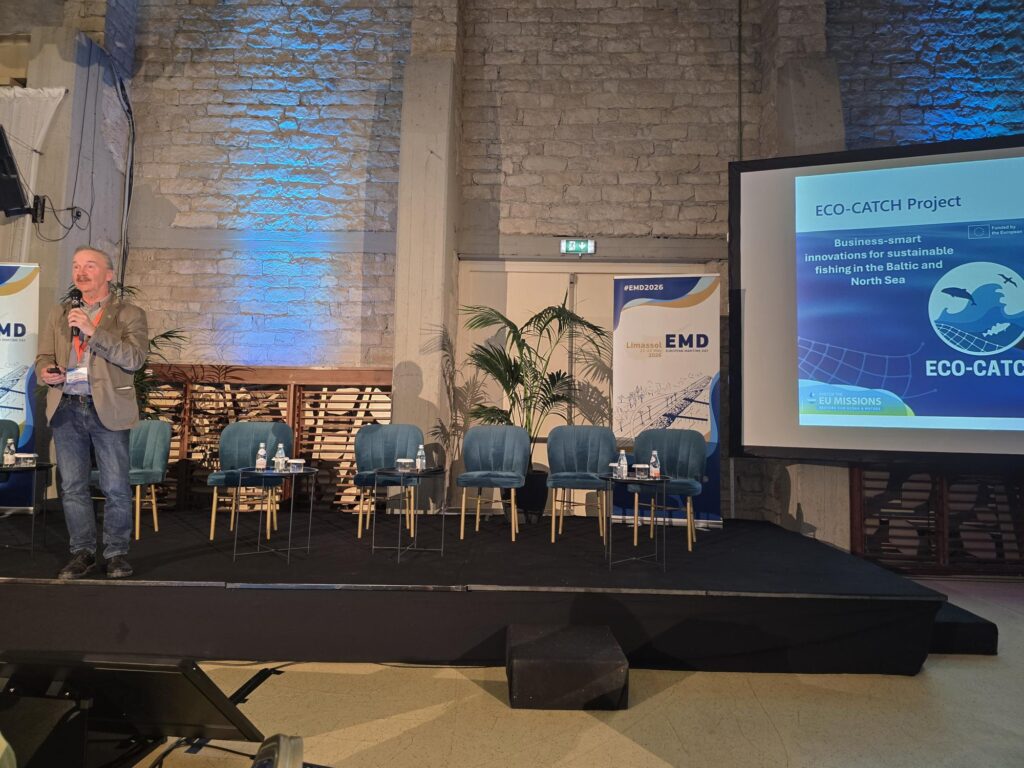
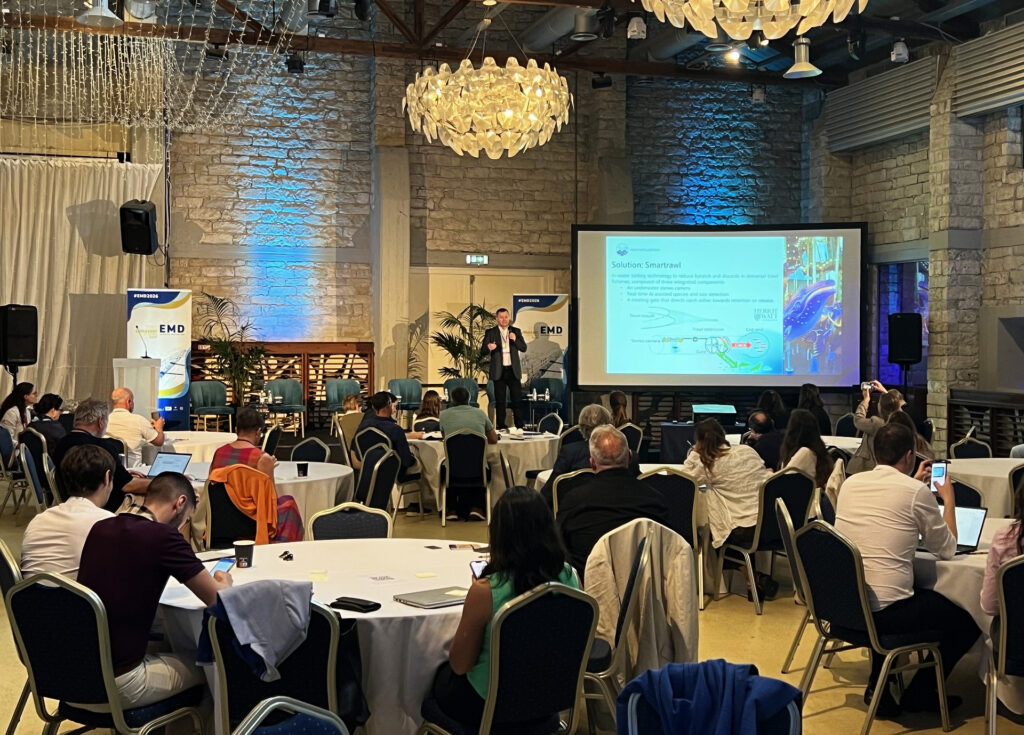
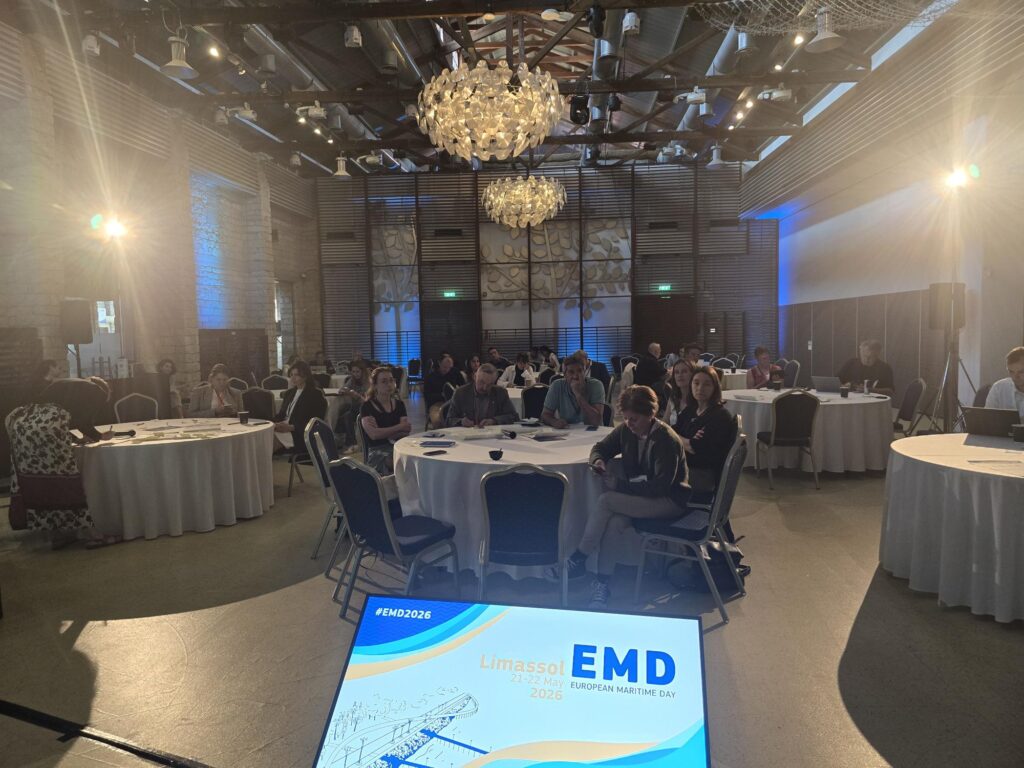
The format worked beyond our hopes: discussions were lively, substantive and grounded in the real-world challenges.
The four solutions discussed, all in regard with the technical measure regulation, were brough by each project:
- Alternative fishing fishing gears transition, from trawl to pot and from Gillnets to traps by ECO-CATCH
- Smartrawl – an AI driven selective sorting fishing gear, advanced by Heriot-Watt University in MarineGuardian
- Optimised fishing trawl leading to up to 20% fuel savings from the DecarbonyT project
- The Mr.Goodfish app to increase consumer awareness, from Mr. Goodfish 3.0
The technical solutions presented by MarineGuardian and ECO-CATCH received particularly positive responses, attendees expressed genuine confidence that these innovations have the potential to make a tangible difference in fishing practice.
At the same time, the room kept thinking: a recurring theme across the PESTEL discussions was the economic reality facing different fleet segments and in particular the situation of small-scale fishers.
However promising a technology may be, the consensus was clear: if the cost of transition falls entirely on the fisher, adoption will remain limited. Small-scale fishing operations, already under significant economic pressure, cannot be expected to absorb the investment required by many of the innovations currently being developed and tested.
It is a tension that sits at the heart of the EU’s ambitions for sustainable fisheries and one that MarineGuardian, through its stakeholder engagement methodology, is working to surface, document and address.
Looking ahead
The conversations started in Aya Napa and continued in Limassol will feed directly into the ongoing work of the project. The insights gathered from stakeholders, including the barriers identified through the PESTEL exercise, will contribute to the project evidence base. These finding will be consolidated into a policy-brief, that will help shape how MarineGuardian’s solutions are refined, communicated and positioned for adoption.