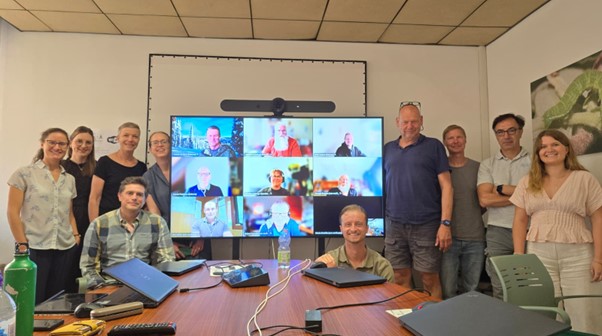
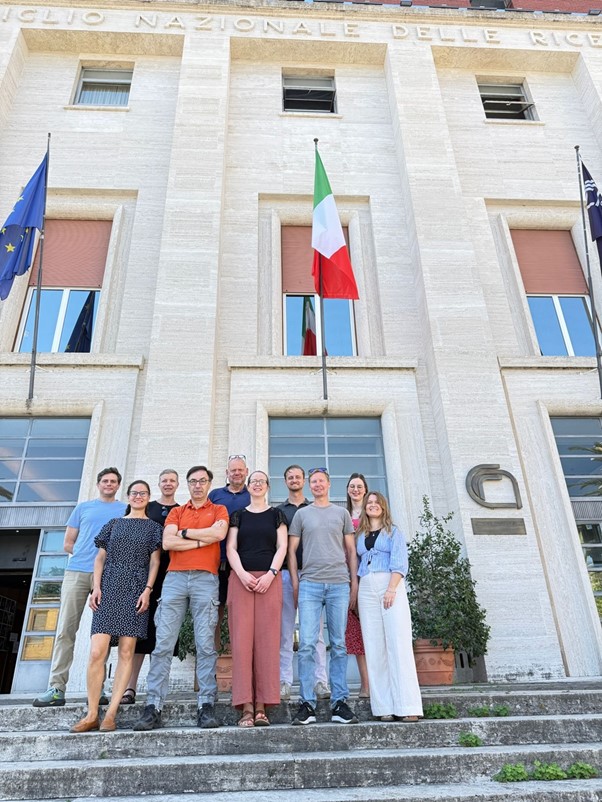
From 16–18 June 2026, MarineGuardian participated in the annual meeting of the ICES Working Group on Innovative Fishing Gear (WGING) in Rome, Italy. Chaired by Julia Calderwood (Marine Institute, Ireland) and Antonello Sala (Italian National Research Council, CNR), the meeting brought together 27 experts from 20 organisations across 11 countries to advance work on innovative fishing technologies and better understand the factors influencing their adoption across fisheries.
Representing MarineGuardian, Caecilia Managò, Work Package Lead for Impact Maximisation, contributed to discussions on stakeholder engagement, innovation uptake, and the barriers and incentives affecting the implementation of innovative fishing solutions.
A key focus of the meeting was the continued development of the ICES Gear Innovations Catalogue, a resource designed to document and assess innovative fishing gears and technologies. The catalogue aims to support evidence-based decision-making by providing information on gear performance, technological readiness, environmental benefits and implementation challenges.
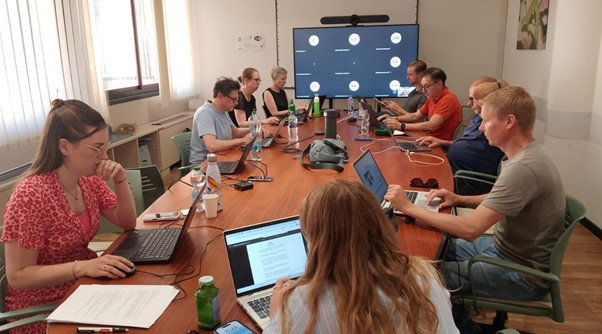
MarineGuardian contributed to discussions on the development of the PESTEL framework, which examines the political, economic, social, technological, environmental and legal factors that influence innovation uptake. Drawing on stakeholder engagement activities delivered through the project, Caecilia shared experiences from participatory workshops, such as the recent joint Gear to Governance Workshop, and innovative engagement approaches, i.e. a PESTEL Serious Game, that help identify the real-world conditions for successful adoption of fisheries innovations.
These discussions are particularly relevant for MarineGuardian, which is further developing and demonstrating 44 innovative solutions to reduce bycatch, improve selectivity and support more sustainable fisheries. As the ICES Gear Innovations Catalogue continues to evolve, it presents an important opportunity to showcase these solutions, making information on their performance, maturity and implementation potential accessible to fisheries managers, policymakers, researchers and industry stakeholders.
A recurring theme throughout the meeting was that many innovative fishing technologies are already technically ready for use, yet their uptake is often limited by economic, social and regulatory factors rather than technological barriers. Understanding and addressing these challenges is essential for accelerating the transition towards more sustainable and resilient fisheries.
MarineGuardian will continue contributing to WGING activities and supporting efforts to strengthen the evidence base around innovation uptake. Through its work on stakeholder engagement, innovation transfer and the development of 44 practical solutions, the project is helping bridge the gap between promising technologies and their successful implementation at sea.