
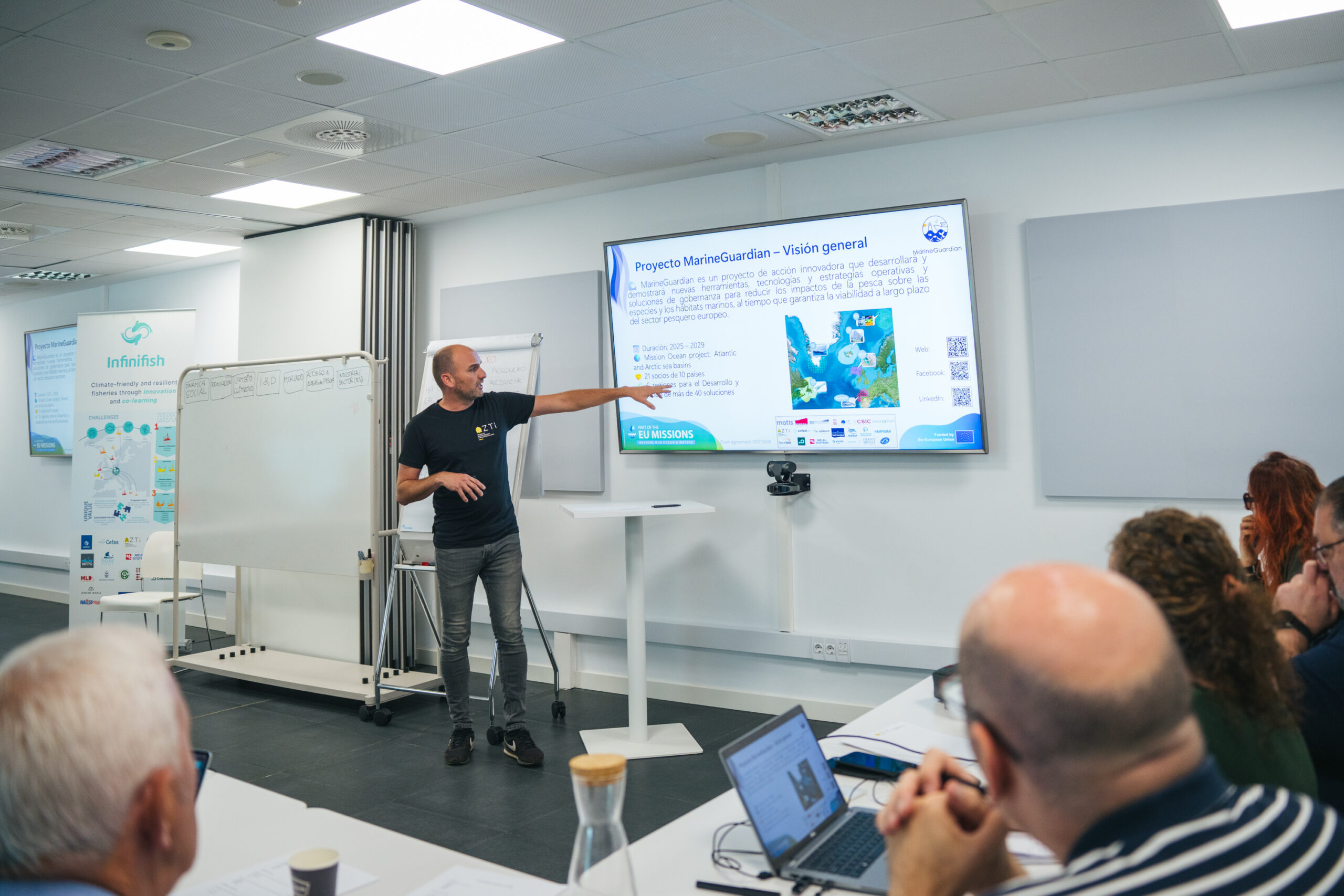
From a stakeholder workshop, to a scientific conference, and test in the field, the team at AZTI has done outstanding achievements in the last weeks.
June was a significant month for the MarineGuardian team in the Bay of Biscay. Within the space of a few weeks, AZTI was at the centre of three distinct but complementary moments: a joint stakeholder workshop, an international scientific conference and tests in the field of the solutions they are advancing. Together, they offer a snapshot of what it looks like when research, engagement, and knowledge-sharing all happen at once.
Three projects in one room filled with discussions: the first Bay of Biscay workshop
At the beginning of June 2026, AZTI’s hosted a joint stakeholder workshop at their headquarters in Derio bringing together three European research projects, MarineGuardian, Infinifish, and OptiFish, alongside researchers, industry representatives, technology developers, and policymakers.
The event was supported by SINTEF Ocean and Cefas, with SINTEF having provided dedicated training the day before to help facilitate the session. That preparation matters: structured stakeholder engagement is important to get as precise information as possible.
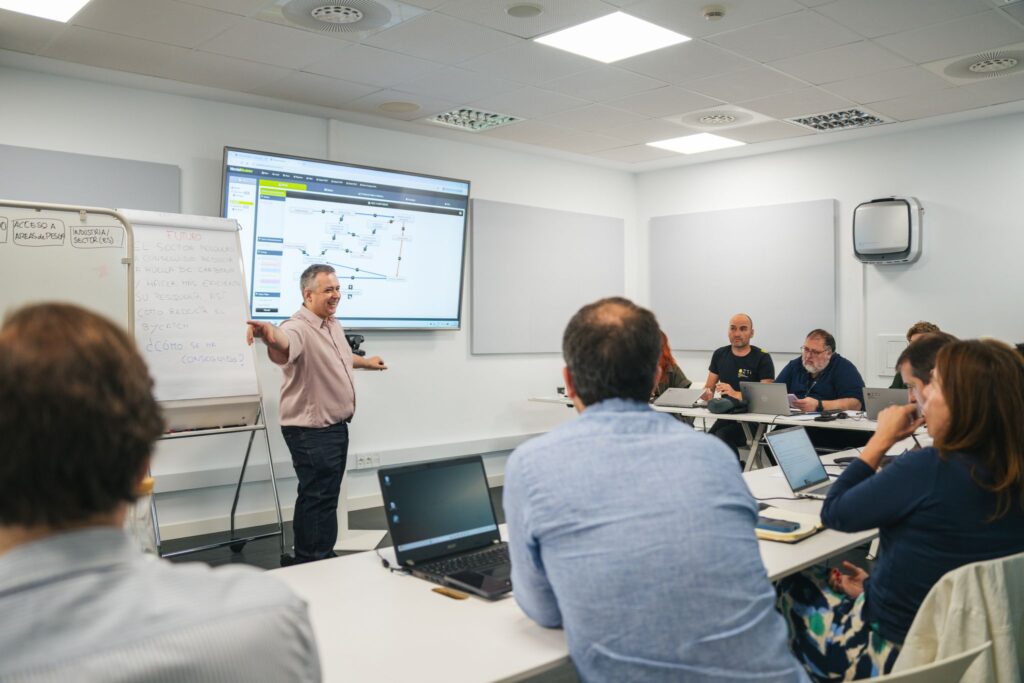
For MarineGuardian, this workshop corresponds to the Bay of Biscay area within WP1, the work package dedicated to understanding barriers and drivers of technology adoption across different fisheries contexts. The Bay of Biscay brings its own specific dynamics: a diverse fleet, a strong tradition of coastal fishing communities, and a regulatory environment shaped by both European and regional frameworks.
The goal of the joint session was to present and assess solutions that reduce the environmental impacts of fisheries, while strengthening the connections between science, policy, and industry needed to support climate adaptation and more efficient fisheries management.
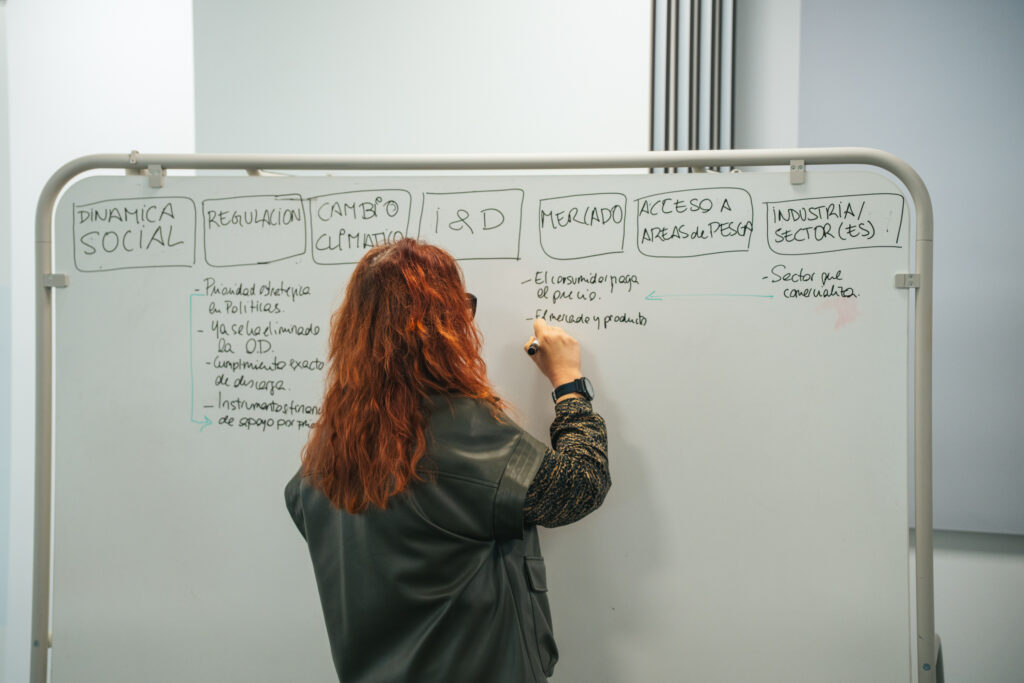
The three projects approach these challenges from complementary angles. Infinifish focuses on climate-resilient and energy-efficient fisheries. OptiFish works on catch monitoring, transparency, and AI-based control systems. MarineGuardian develops solutions to reduce environmental impacts and protect marine ecosystems. Bringing their stakeholder communities together, even for a single day, created space for dialogue that would not have happened otherwise.
Among those joining the discussion were producer organisations OPEGUI, Opescaya, and OPPAO, as well as ZUNIBAL, CEIP Blas de Lezo, SILECMAR, and ILVO. The diversity of participants reflected the ambition of the session: innovation that responds to real operational needs can only be designed with the people who face those needs every day.
BYGUARD at ISOBAY: from tool advancement to conversation
A week later, from 16 to 18 June, the international ISOBAY conference took place in Donostia-San Sebastián, one of the key scientific gatherings focused on the Bay of Biscay ecosystem.
AZTI researcher Isabel García Barón presented BYGUARD, a spatio-temporal bycatch reduction tool developed within MarineGuardian. BYGUARD is designed as a multi-taxa tool, meaning it can help identify when and where different vulnerable species are most at risk of incidental capture, giving fishers and managers actionable, spatially explicit information to reduce bycatch across a range of species groups.
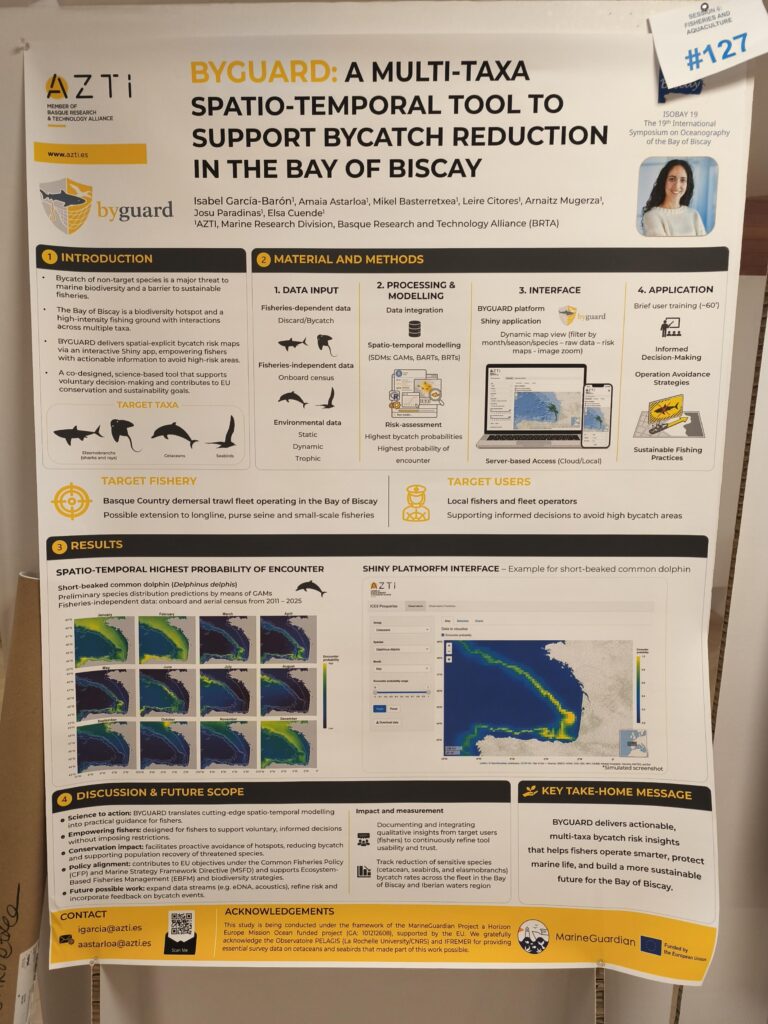
Presenting this work at ISOBAY was an important step: moving a tool from internal development into the scientific community, opening it to scrutiny, feedback, and wider visibility.
Testing at sea: seabird bycatch mitigation
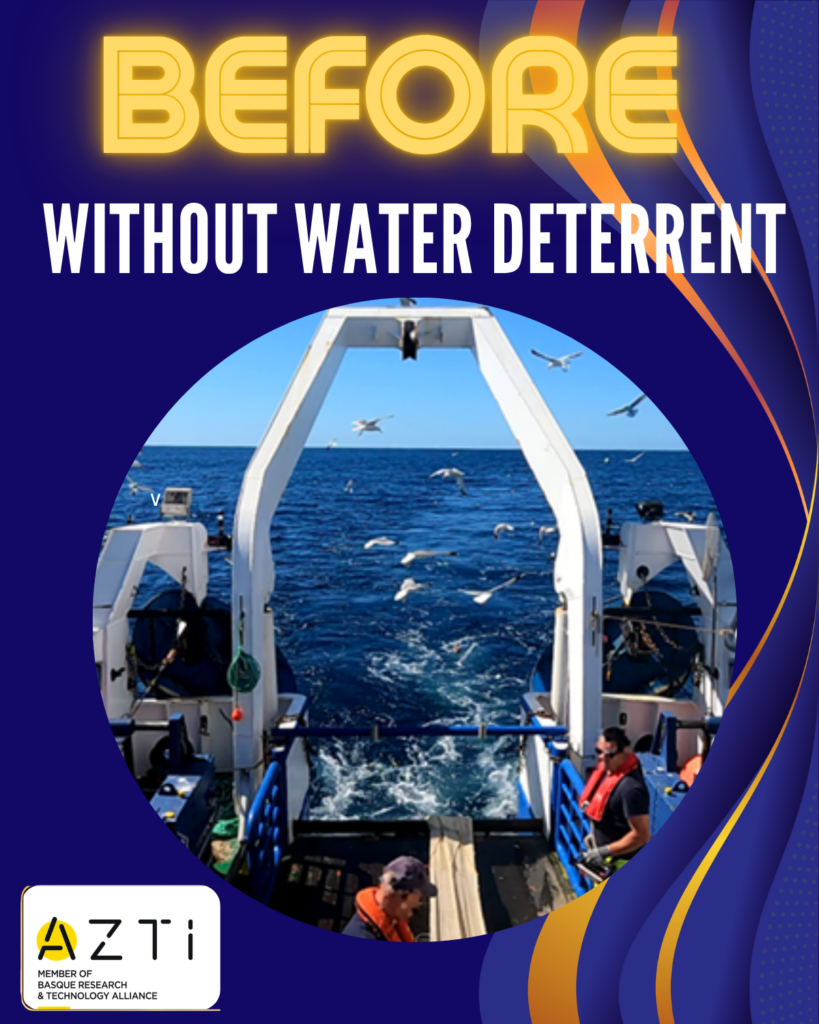
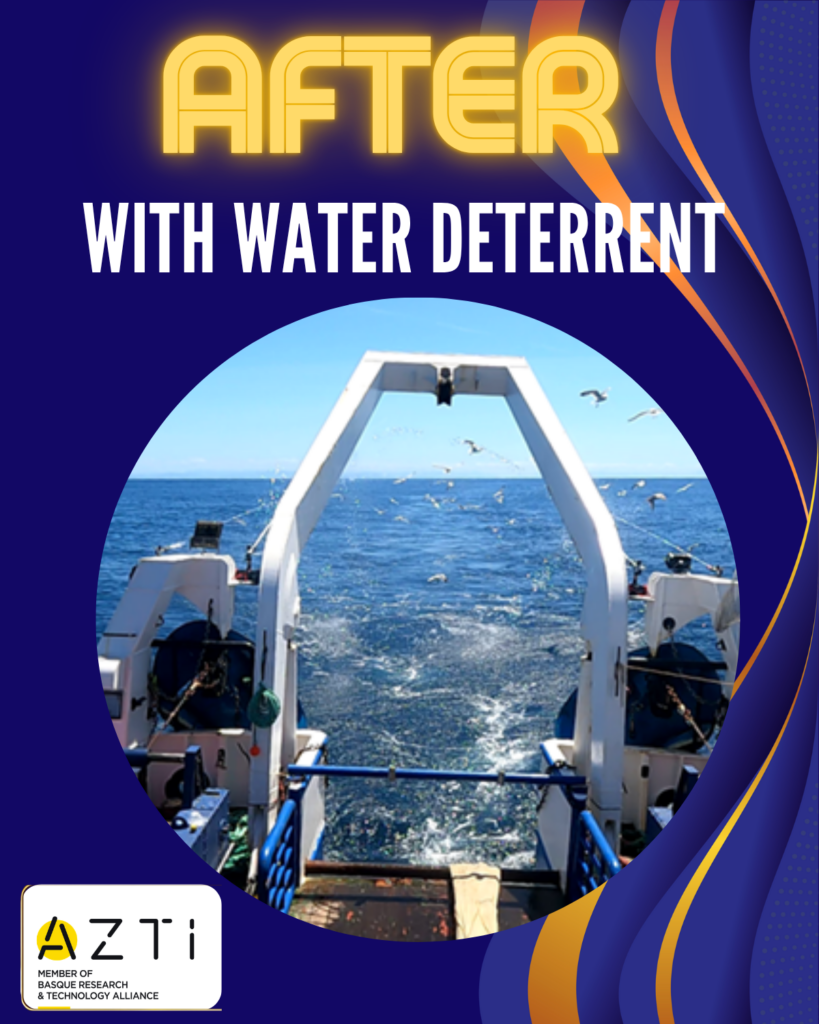
In between the workshop and the conference, the AZTI team was also at sea. Between June 9th and 13th, the first sea trials of a prototype seabird bycatch mitigation system were conducted in the Bay of Biscay aboard the RV Emma Bardán, a research vessel owned by the Spanish General Secretariat for Fisheries. The system works by preventing seabirds from approaching and diving near trawl gear during hauling, using a water curtain and directed jet as both a visual and physical deterrent in the critical zones around the gear. Trials ran alongside a broader research campaign on trawl selectivity, making efficient use of available sea time. The results from this first prototype will feed directly into further development and future demonstration phases within MarineGuardian.
Laying the groundwork for what comes next
A stakeholder workshop, a scientific conference, and sea trials, all within the same two-weeks window. That is not a coincidence. It reflects the ambition of how MarineGuardian operates: tools being tested on the water, results being shared with the scientific community, and stakeholders being brought into the conversation at every step.
The Bay of Biscay is one of the most complex fisheries environments in Europe. The work happening there, in workshops, at conference podiums, and on the water is exactly the kind of sustained, multi-level engagement that turns research into practice.