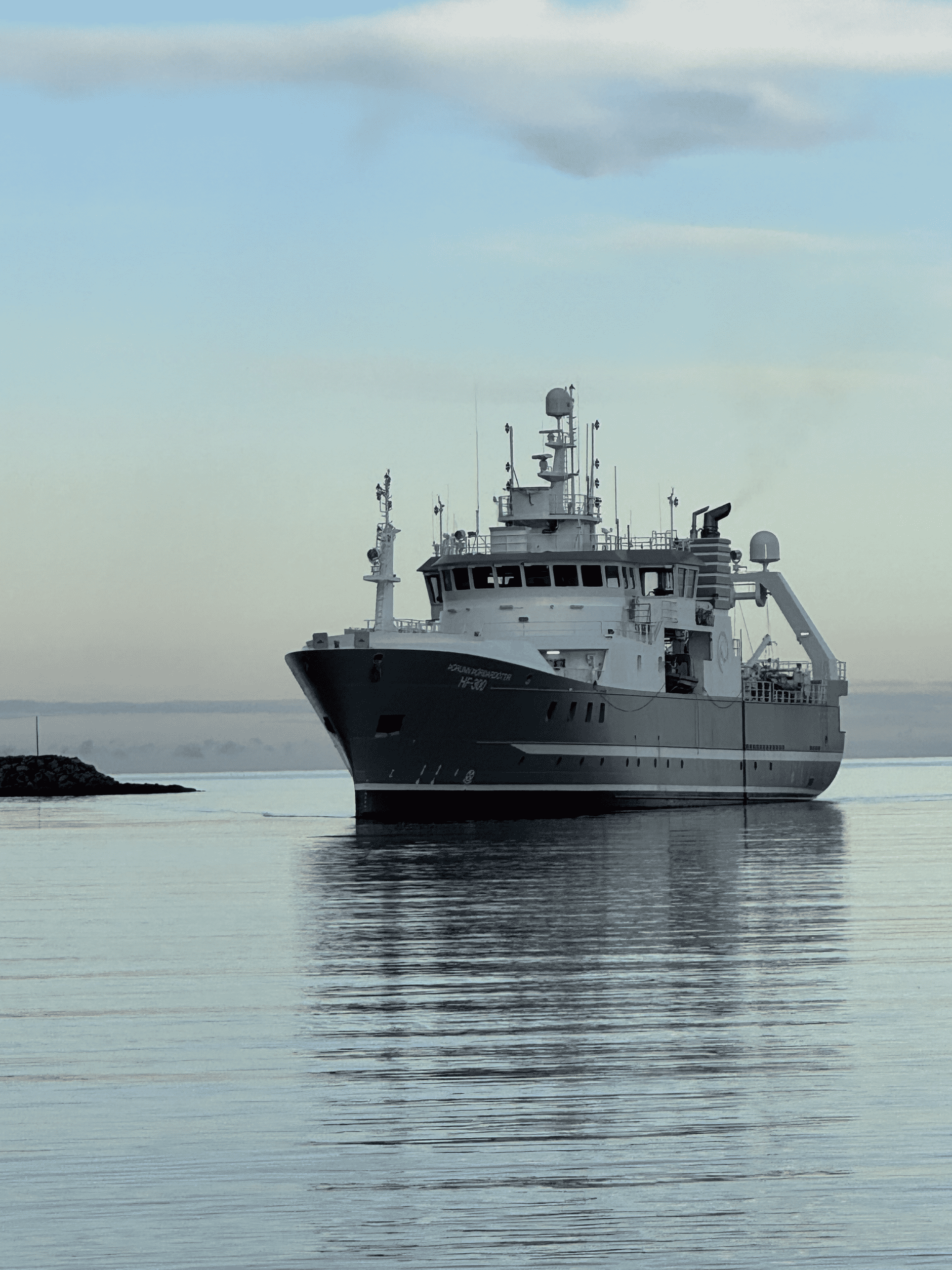
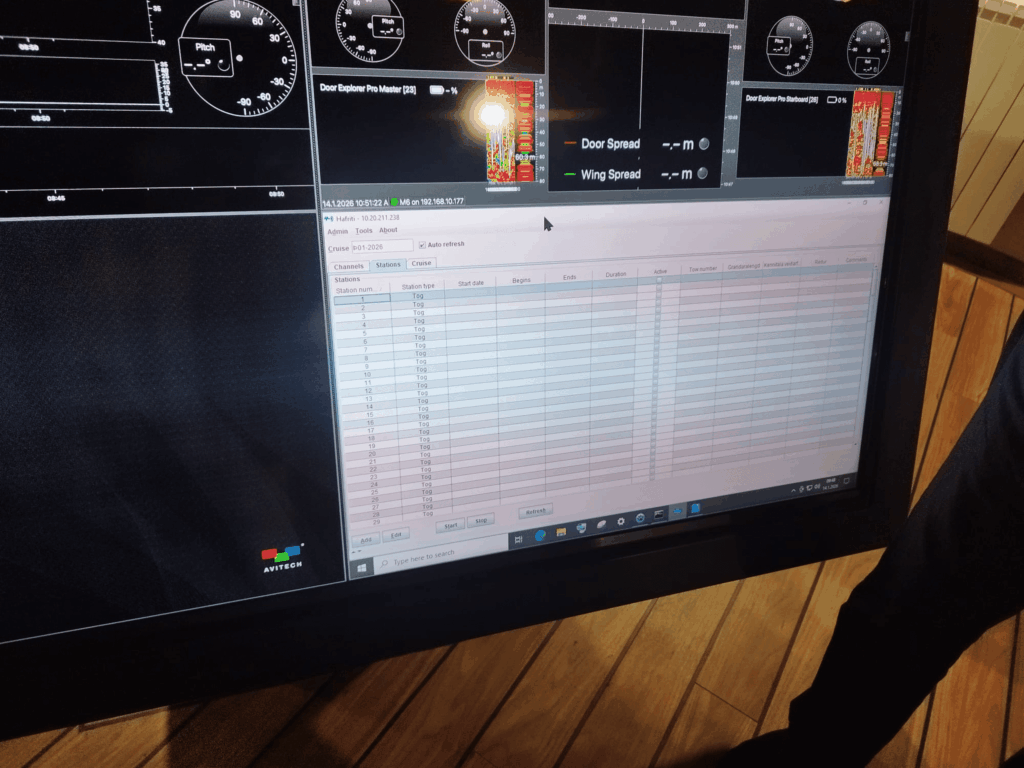
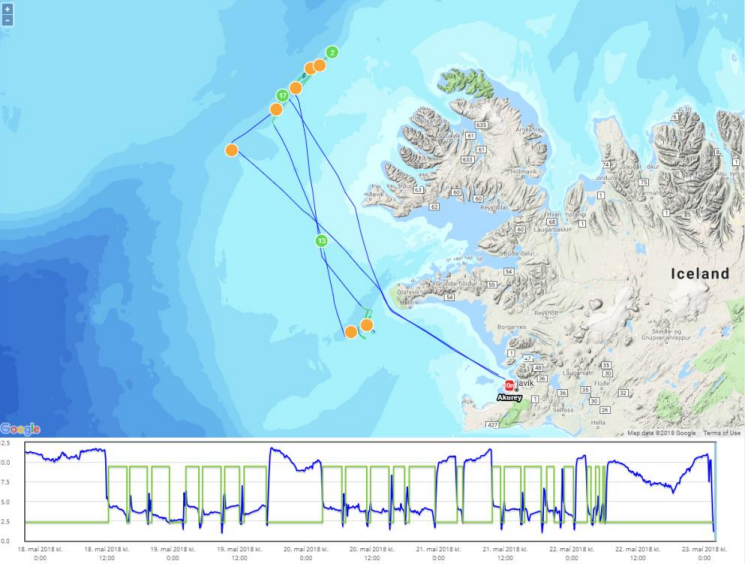
Last month, MarineGuardian reached a key milestone in the development of Optigear with the installation of Trackwell’s Hafsýn fleet management system onboard the vessel Þorún (research vessel from the Marine and Freshwater institute in Iceland). This marks the beginning of the first operational data collection phase in advancing Optigear toward commercial deployment.
By integrating Hafsýn with Optigear, captains could now receive live operational feedback designed to support:
- Minimizing fuel consumption
- Reducing seabed impact
- Extending the lifespan of fishing gear
What is Optigear ?
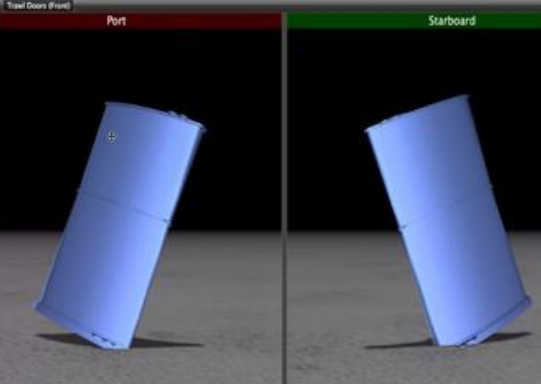
Otigear is an AI-based decision support system to optimise gear usage parameters in relation to their own past observed catch, fuel usage, and environmental impacts across fisheries and vessels. Optigear is connecting and integrating data from the automatic trawl winch (ATW) system and integrated gear sensors, GPS, environmental sensors onboard the vessel.
It is also linked to catch logbooks, incorporating data such as gear type, haul information, and captain records. Equipped with a basic reporting interface for analysing measurements and relationships between variables, the system is designed to automatically upload vessel data to a land-based platform for further analysis.
What was tested ?
This first deployment was designed to move Optigear from theory into practice. Rather than testing in controlled conditions, the system was implemented onboard a research vessel. A key focus was ensuring that all sensors and onboard systems communicate seamlessly — validating the integration of gear sensors, vessel systems, and data pipelines so that information flows reliably from sea to the analysis platform.
At the same time, the team began establishing baseline operational parameters by collecting reference data from real fishing operations. These baselines will serve as performance benchmarks for future commercial deployment. The phase also generated essential ground-truthing data, allowing MarineGuardian to verify system accuracy under real fishing conditions.
This is a key step toward scalable, data-driven fishing operations, so stay tune for further updates !