
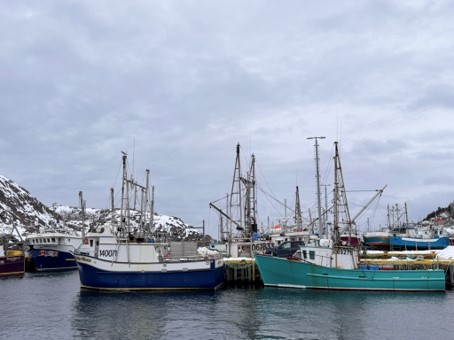
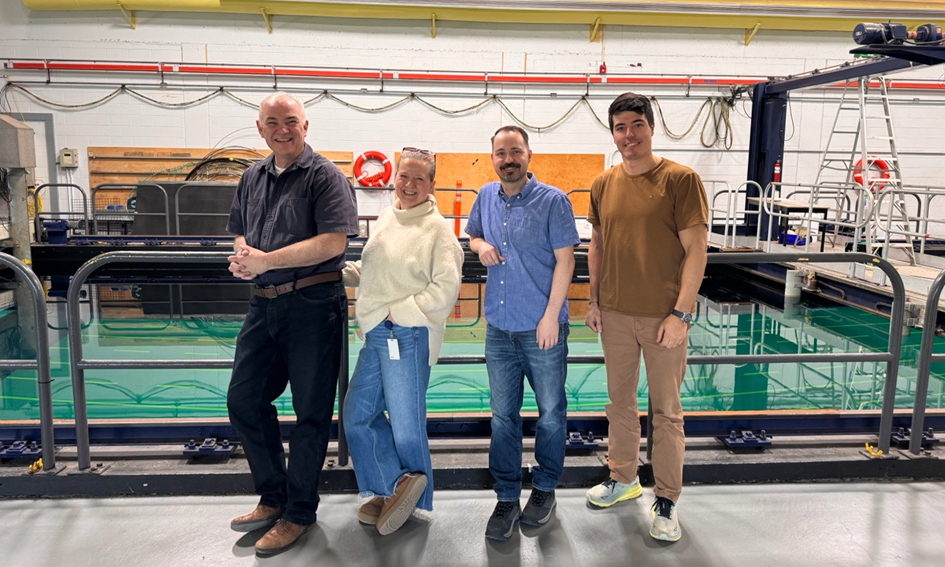
The first week of March 2026, SINTEF – who leads the work on stakeholders and governance in MarineGuardian – held a training workshop in St. John’s, Newfoundland, Canada, with partners in the MarineGuardian project, preparing their teams to run stakeholder workshops. In the Newfoundland case study, the project is working with industry to explore gear innovations designed to reduce environmental impacts while maintaining viable fisheries.
These gear innovations include technologies and gear improvements aimed at reducing whale entanglement risks in fixed fishing gear used in trap and pot fisheries such as snow crab and lobster; improving the selectivity of trawl gear to reduce bycatch of non-target species in shrimp and groundfish fisheries; and minimising seabed disturbance caused by bottom trawling. These solutions are not purely experimental — many already exist at lower technology readiness levels (TRL) today. As such, the challenge is not simply whether they work, but whether they can realistically be adopted in fisheries in the region, and what barriers need to be overcome to ensure their implementation.
To understand the trade-offs associated with adopting these solutions, MarineGuardian will run a series of stakeholder workshops across all six case study regions during the spring of 2026. The aim of these workshops is to compile expert knowledge about precisely what the barriers are that may prevent the adoption of new fishing practices, including for example operational barriers such as how the gear performs in real fishing conditions; economic barriers such as costs, profitability and investment risk; cultural barriers including fishing traditions or resistance to change; and institutional barriers such as regulations, monitoring, or licensing conditions.Understanding these barriers is essential for identifying solutions that are not only environmentally effective, but also feasible for the fishing industry to adopt.
From Conceptual Mapping to Fuzzy Cognitive Mapping
The workshop in Newfoundland trained partners from Memorial University in the methodology that will be used in stakeholder sessions across all case areas, ensuring cross-case comparability. The process consists of two stages: Conceptual Mapping followed by Fuzzy Cognitive Mapping (FCM).
In the Conceptual Mapping stage, participants first work together to map the system that influences the adoption of new fishing technologies. Participants are asked to imagine themselves 40 years into the future, where today’s environmental challenges have been solved, and work backwards to identify what changes would have needed to happen to reach that outcome. To do this, they consider how key drivers may have changed, including 1) regulations, 2) markets, 3) technology, 4) access to fishing areas, 5) research, 6) climate change, and 7) industry.
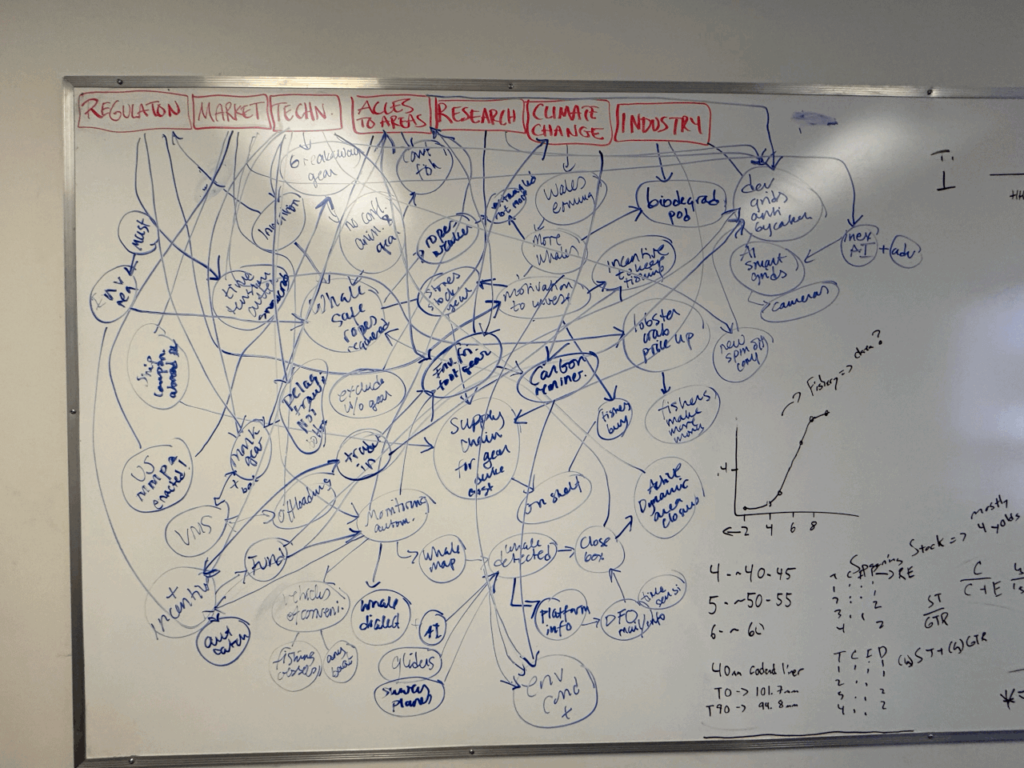
This exercise is followed by a second stage where facilitators apply Fuzzy Cognitive Mapping. In this stage, participants assign strengths to the relationships between variables in the system, representing how strongly one factor influences another. The results will allow researchers to explore how different policy interventions or management strategies might influence outcomes.
These results will matter because fisheries systems are complex, and decisions about adopting new technologies are influenced not only by environmental concerns, but also by economics, regulations, and the operational realities of fishing. By facilitating stakeholder-driven perception workshops with participants from the fishing industry, MarineGuardian aims to better understand the barriers and trade-offs associated with implementing the sustainable fishing technologies being developed in the project.
Over the coming months, similar workshops will take place across all MarineGuardian case study regions, helping to identify realistic pathways toward more sustainable fisheries in all six case areas.