
This solution is developed by:
Incidental capture of cetaceans and seabirds in demersal trawl fisheries is one of the most pressing bycatch challenges facing European fisheries management. Monitoring these interactions at scale is critical for regulatory compliance and for understanding the true ecological cost of fishing operations, yet current approaches rely heavily on human observers, making fleet-wide, continuous monitoring impractical and costly. i-EYE brings artificial intelligence directly into the fishing operation to change this.
i-EYE is an AI-based automated monitoring system designed to detect and identify cetaceans and seabirds in demersal trawl fisheries in real time, providing an observer-free solution that can operate continuously across entire fleets.
The challenge
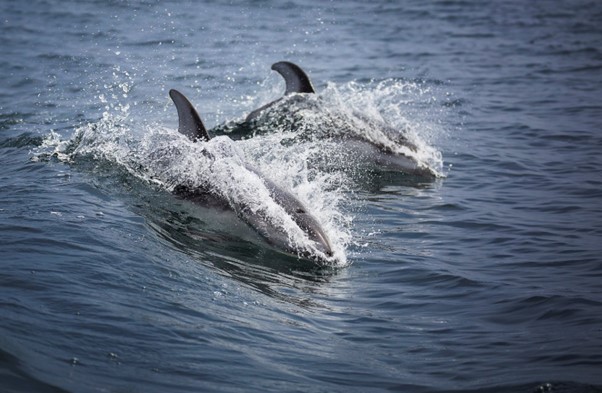
Demersal trawl fisheries create high-risk interaction zones for protected species. As nets are hauled to the surface in areas such as the Bay of Biscay, the activity attracts cetaceans and seabirds, increasing the likelihood of incidental capture or disturbance. Accurately monitoring these interactions across commercial fleets is essential — but current methods face significant limitations:
- Manual observation is time-consuming and diverts crew attention from normal fishing operations
- Human observers are expensive and cannot be deployed at the scale required for fleet-wide monitoring
- Observer fatigue and reporting bias compromise the reliability and consistency of recorded data
- EU mandates on bycatch monitoring require robust, large-scale data that voluntary or sporadic observer programmes cannot deliver
The solution
i-EYE addresses these challenges by automating the detection and classification of cetaceans and seabirds using AI-powered image recognition, integrated into the fishing operation without disrupting normal workflows.
The system works by:
- Continuously monitoring fishing operations using onboard cameras, capturing footage during net hauling and other high-risk interaction moments
- Applying AI algorithms trained to detect, track, and classify cetacean and seabird presence and bycatch events in real time
- Building an automated pipeline for detection, tracking, and classification — removing the need for manual review of footage
- Generating validated bycatch data at scale, providing fisheries authorities with unbiased, fleet-wide records for compliance verification and management purposes
Target fishery and case study: i-EYE is developed for and tested in the Bay of Biscay and Iberian Waters case study, focusing on the demersal trawl fleet where interactions with common dolphins, seabirds, and other protected species are most frequent.
Target users:
- Fishers: an automated, non-intrusive tool to track bycatch encounters without disrupting daily workflows
- Fisheries authorities: a source of unbiased, large-scale data to verify compliance with strict EU bycatch mandates
Development and progress
The development of i-EYE follows a structured AI training and validation pipeline, moving from image compilation through to automated detection and classification.
Progress to date:
- Compilation of existing images from demersal trawl operations is in progress
- Image annotation using CVAT (Computer Vision Annotation Tool) is underway, building the labelled dataset required for AI model training
Next steps:
- Research and selection of suitable AI model architectures based on operational requirements
- Training of the AI model on the annotated dataset and generation of preliminary prediction results
- Development of an automated pipeline for real-time detection, tracking, and classification of cetacean and seabird bycatch events
Expected impact
i-EYE is expected to contribute to:
- Large-scale, continuous bycatch monitoring across demersal trawl fleets, significantly lowering monitoring time and costs compared to human observer programmes
- Elimination of observer fatigue and reporting bias, improving the consistency and reliability of bycatch records
- Real-time detection of protected species interactions, supporting immediate operational responses to reduce harm
- Fleet-wide compliance data for fisheries authorities, supporting enforcement of EU bycatch regulations and international conservation commitments
How impact will be measured:
- AI performance: evaluated through the model’s accuracy in detecting protected species within active fishing environments, benchmarked against ground truth data
- Operational scale: tracked through fleet adoption rates and the volume of validated bycatch data logged during commercial operations
- Reduced ecological impact: measured through long-term reduction in cetacean and seabird bycatch rates per unit of fishing effort across the Bay of Biscay and Iberian Waters fleet
