
Solution developed by

Bycatch of small cetaceans, particularly the endangered Iberian porpoise and the common dolphin, remains a concern in beach seine fisheries. Although the use of acoustic deterrent devices (pingers) has been regulated since 2020, their effectiveness and implementation are not consistently monitored.
The MarineGuardian acoustic deterrent solution for beach seine fisheries aims to evaluate the real-world performance of pingers during commercial fishing operations, supporting effective bycatch reduction and improved compliance.
The challenge
Beach seine fisheries operate in coastal areas that often overlap with key habitats for cetaceans, specifically the Iberian porpoise (Phocoena phocoena) which is on the IUCN red list and the common dolphin. Despite regulatory requirements set since 2020, limited monitoring makes it difficult to assess how well pingers reduce bycatch under commercial conditions.
The solution
The solution focuses on first interviewing fishers to understand where the highest bycatch rates happen and then testing commercially available pingers on how and where to place them on the fishing gear to reduce bycatch. Within MarineGuardian we will:
- Assess their effectiveness in reducing cetacean interactions in beach seine fisheries
- Test acoustic deterrent devices (pingers) during commercial fishing trips
Development and progress
Experimental trials began in August 2025 and are currently being carried out onboard three commercial vessels. The trials include testing two different acoustic deterrent devices (pingers): Future Oceans – Netguard and Fishtek.
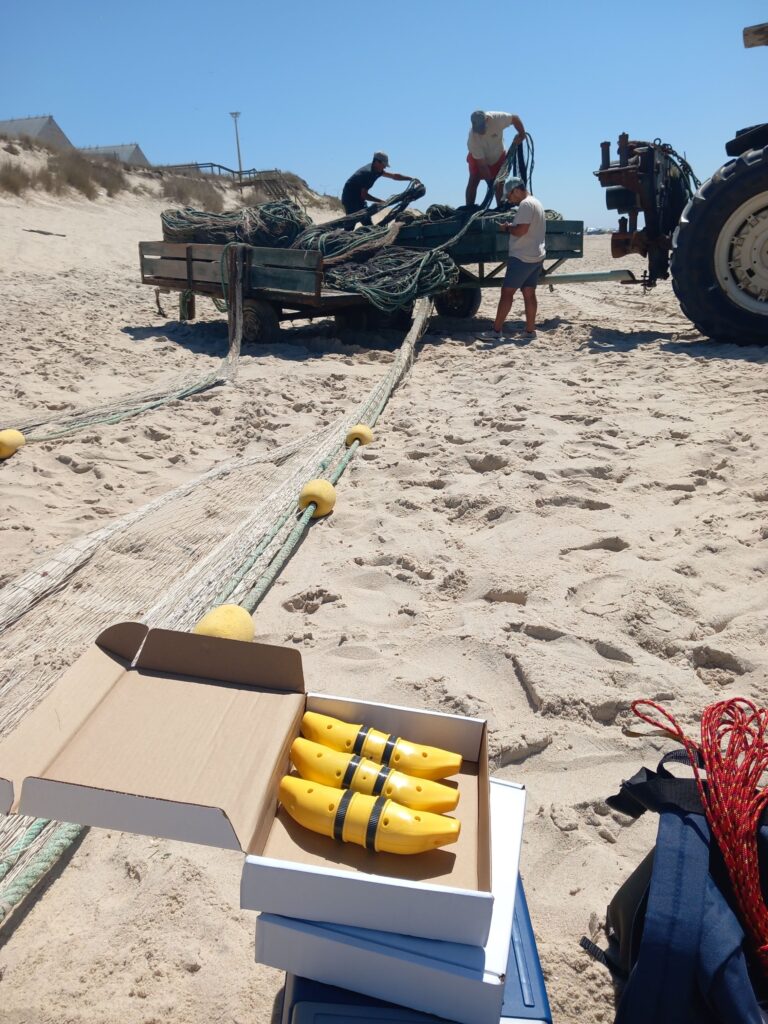
Acoustic deterrent device from Fistek
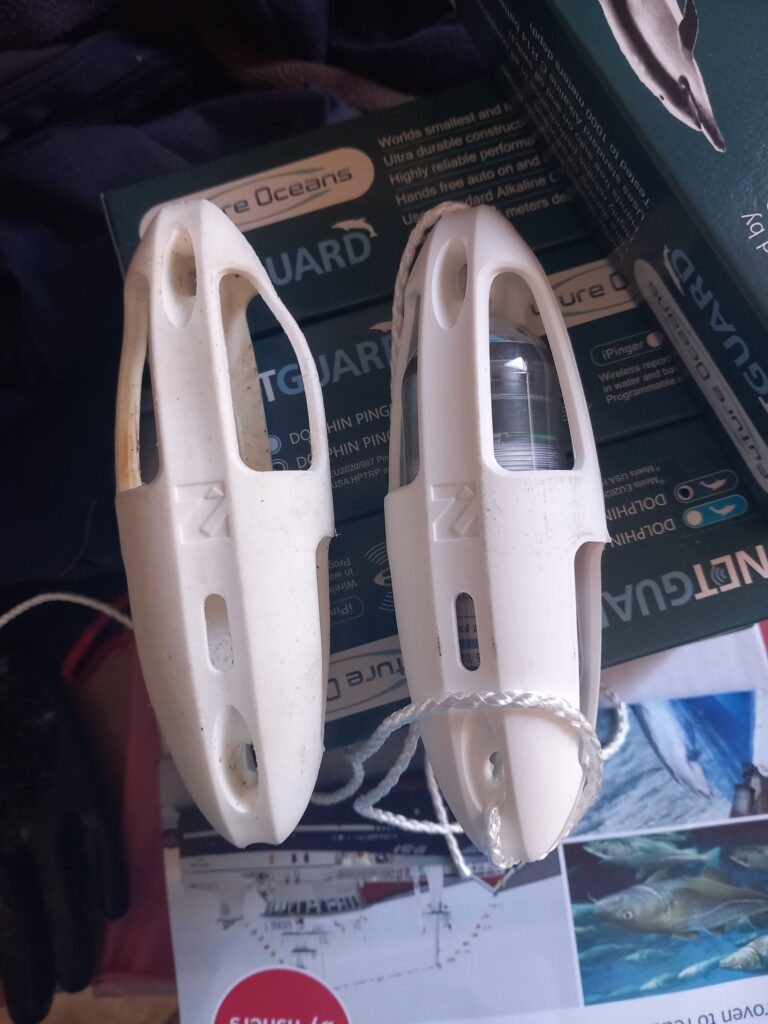
Acoustic deterrent device from Future Oceans – Netguard
Expected impact
By reducing cetaceans interactions with beach seine, the acoustic deterrent device contributes to:
- Improved understanding of pinger performance in beach seine fisheries
- Reduced bycatch of Iberian porpoises and common dolphins
- provided evidence-based support for fisheries management and compliance
