
These solutions are advanced by:


SeinePrecog and TrawlPrecog are advanced acoustic monitoring systems and designed to support real-time species identification and size estimation during fishing operations, helping to prevent unwanted catches and improve gear efficiency.
These systems combine split-beam echo-sounder technology with a software capable of determining species composition and fish size before the catch is made, enabling more selective and sustainable fishing practices.
The challenge
Modern fisheries face two major operational challenges:
- Bycatch of non-target demersal species, such as boarfish in bottom trawl fisheries, which can damage gear and reduce operational efficiency.
- Limited ability to estimate species composition and fish size before capture, particularly in purse seine fisheries.
Without reliable pre-catch identification, fishers must make decisions with incomplete information, increasing the risk of unwanted catches, gear damage, and reduced selectivity.
The solutions
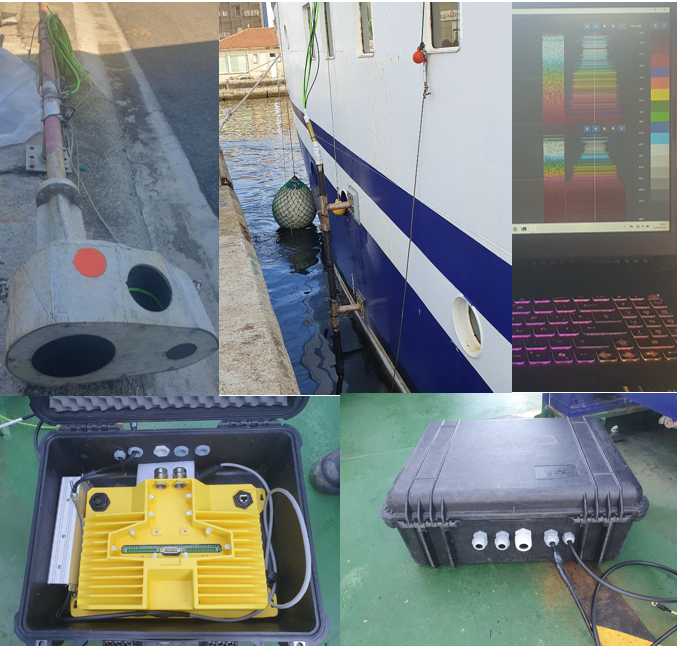
SeinePrecog and TrawlPrecog are a split-beam echo-sounder system equipped with 70–200 kHz transducers for SeinePrecog and lower frequencies transducers for TrawlPrecog. The system is integrated with a software capable of species and size discrimination.
It enables:
- Acoustic detection of fish schools
- Species differentiation
- Fish size estimation
- Improved targeting of desired species
- Avoidance of non-target catches
Development and progress
Sea trials of SeinePrecog were conducted onboard the RV Ángeles Alvariño during the Juvena trawl-acoustic survey in the Bay of Biscay in the autumn 2025.
Acoustic data were collected in 33 of 90 fishing operations, covering both pelagic and demersal species, including anchovy, sardine, horse mackerel, sprat, boarfish, mackerel, hake, and more. These trials enabled validation of the system under real operational conditions.
Testing in deeper bottom-trawling scenarios highlighted technical constraints. Beyond 150 m depth, the signal-to-noise ratio was insufficient for optimal species discrimination which will be studied in further tests. The results confirmed the need for lower acoustic frequencies in the future TrawlPrecog system, while improvements in signal processing and system design are currently underway.
Expected impact
SeinePrecog and TrawlPrecog are expected to significantly improve selectivity and operational efficiency in both purse seine and bottom trawl fisheries.
By enabling real-time acoustic identification of species and size before the catch is completed, these systems will:
- Reduce unwanted catches and discards
- Minimise interactions with non-target and vulnerable species
- Prevent gear damage caused by unintended species
- Improve targeting accuracy and catch composition
- Enhance compliance with selectivity and bycatch regulations
- Support more sustainable and economically viable fishing practices
In the longer term, the integration of intelligent acoustic monitoring into fishing operations will contribute to a transition toward more data-driven, precautionary, and ecosystem-based fisheries management; strengthening both environmental performance and fleet competitiveness.
